Sign in Start your first film

Every frame, accounted for.

One place for your film, from the first page of the script to the archive: prepared, shot, watched, cut and kept. Shot today, uploaded tonight, checked against the DIT's own record, watched by morning.

Start your first film Free until you shoot

Before the shoot, the same film.

The script is read in any language and broken down scene by scene. Cast and their dates, locations and the recce, the board, the call sheets and the weather on each shoot day, in the place the footage will arrive.

How preparing works
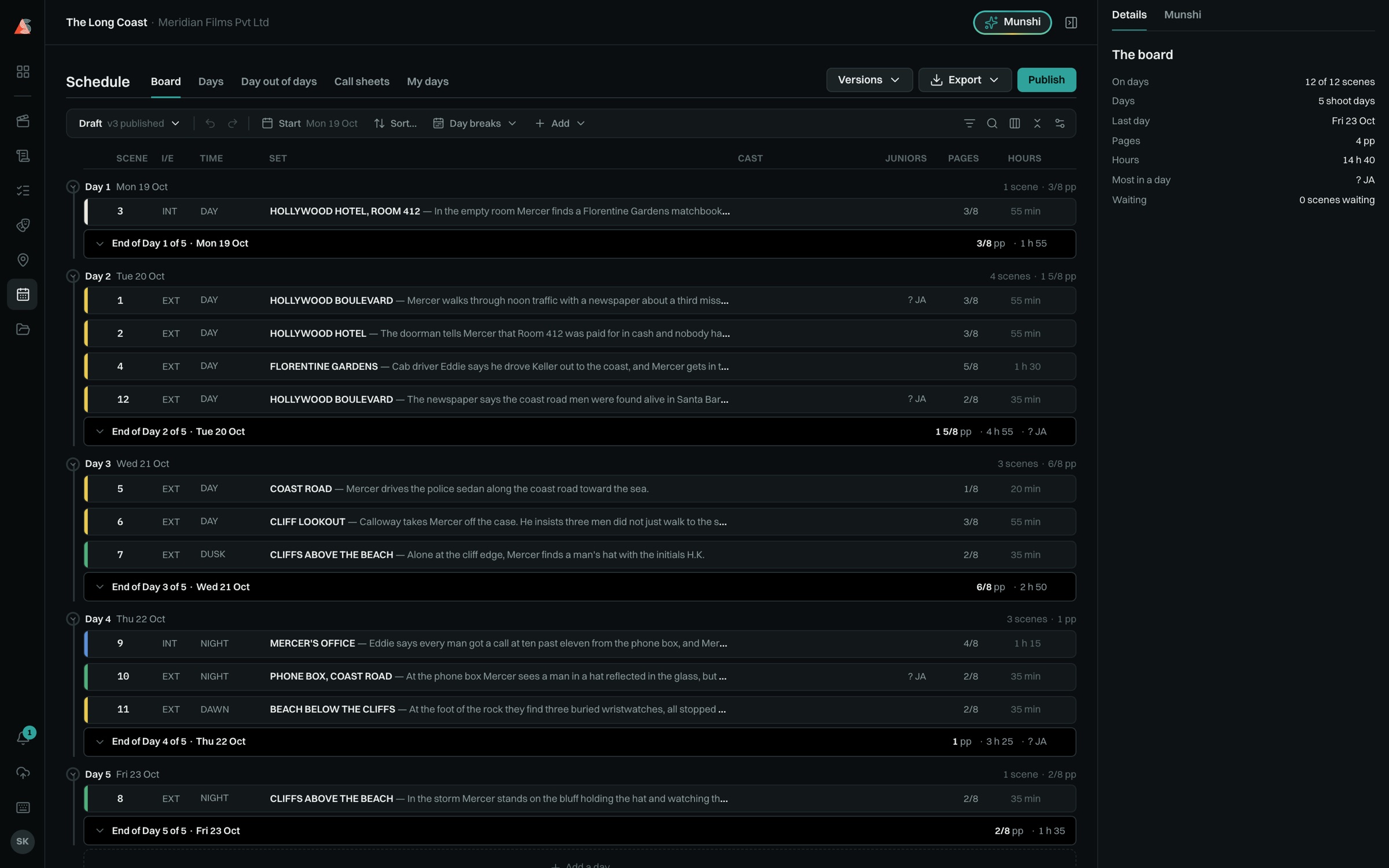
The schedule's board: five shoot days, each scene on its day with its pages and hours.
The board puts every scene on a day, and counts its pages and hours.
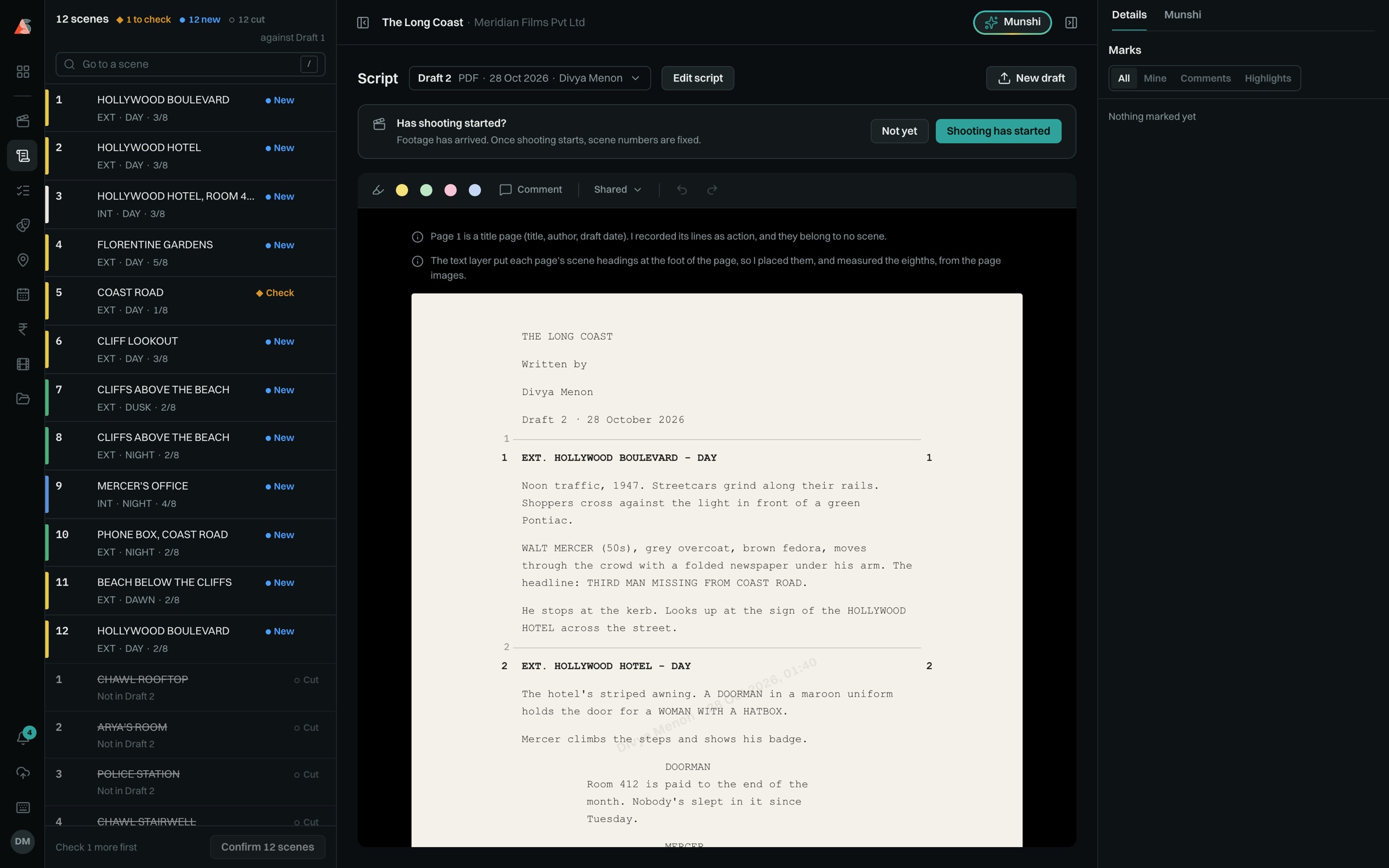
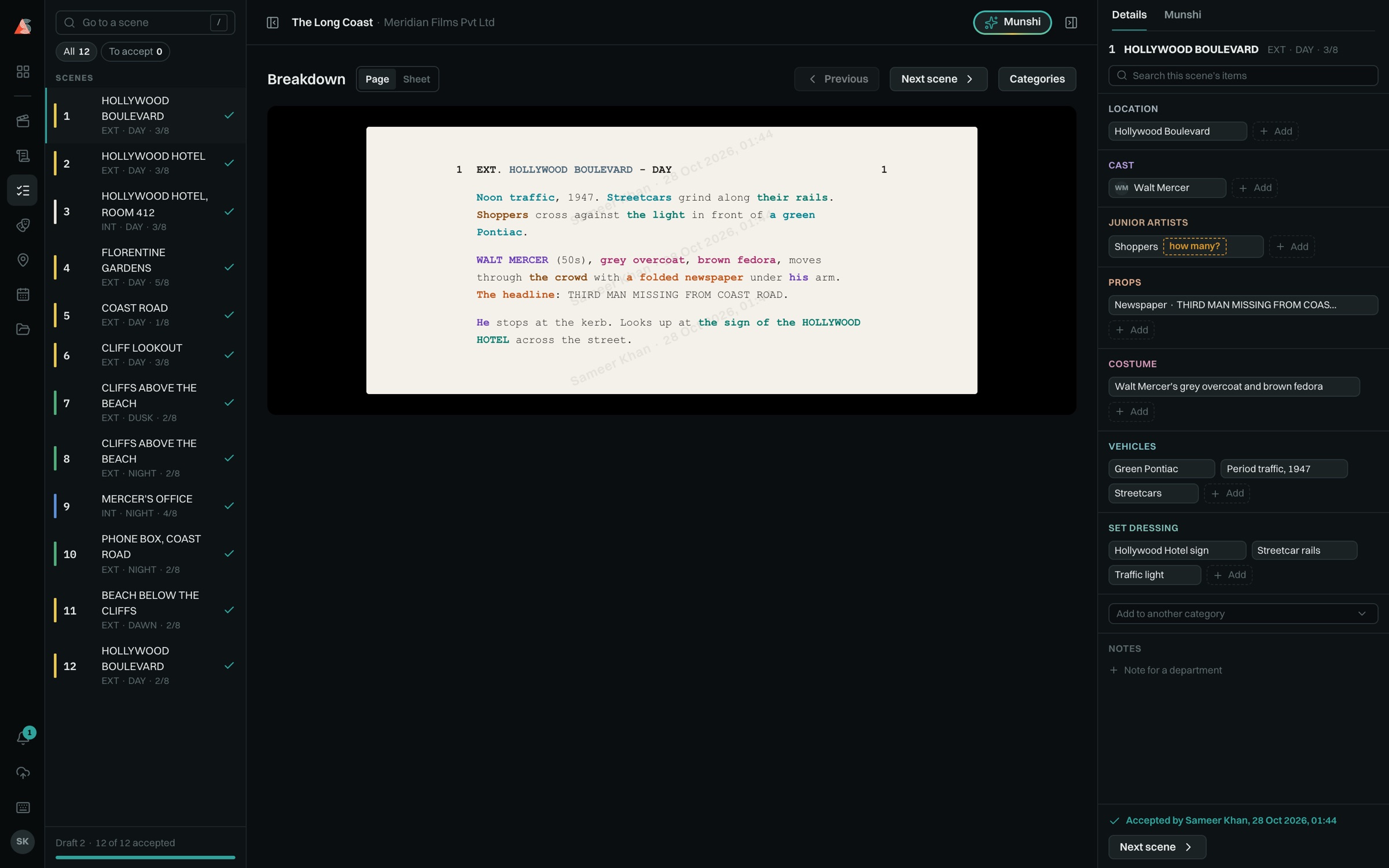
The sample film's script, its twelve scenes listed beside the page.
The script, read page by page.
The breakdown of scene 1: its location, cast, junior artists, props, costume and vehicles, marked on the page.
The breakdown, accepted scene by scene.
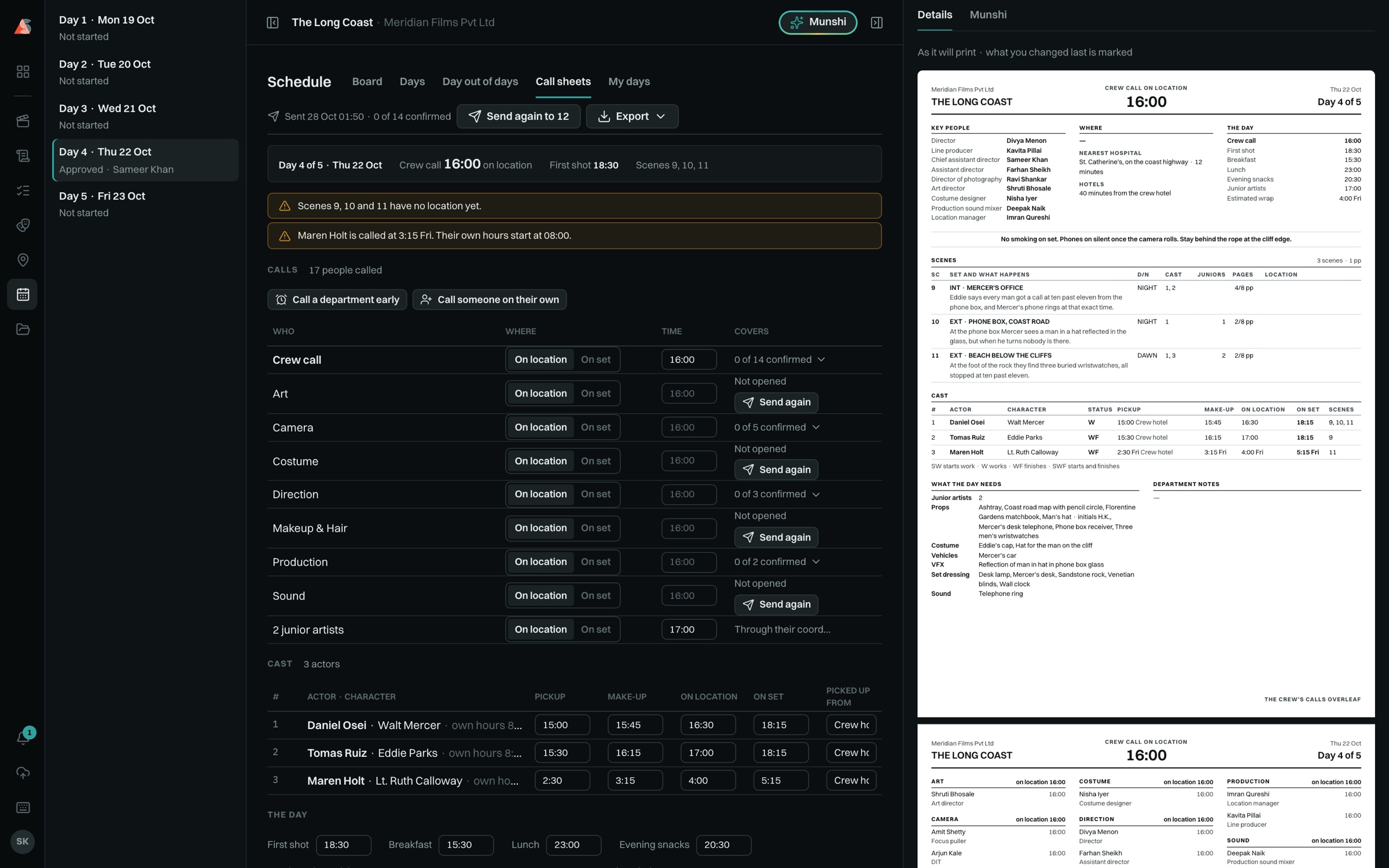
Day 4's call sheet: each department's call, the cast's pickups past midnight, and the printed sheet beside it.
The call sheet says what is missing before it goes, and prints as the crew reads it.
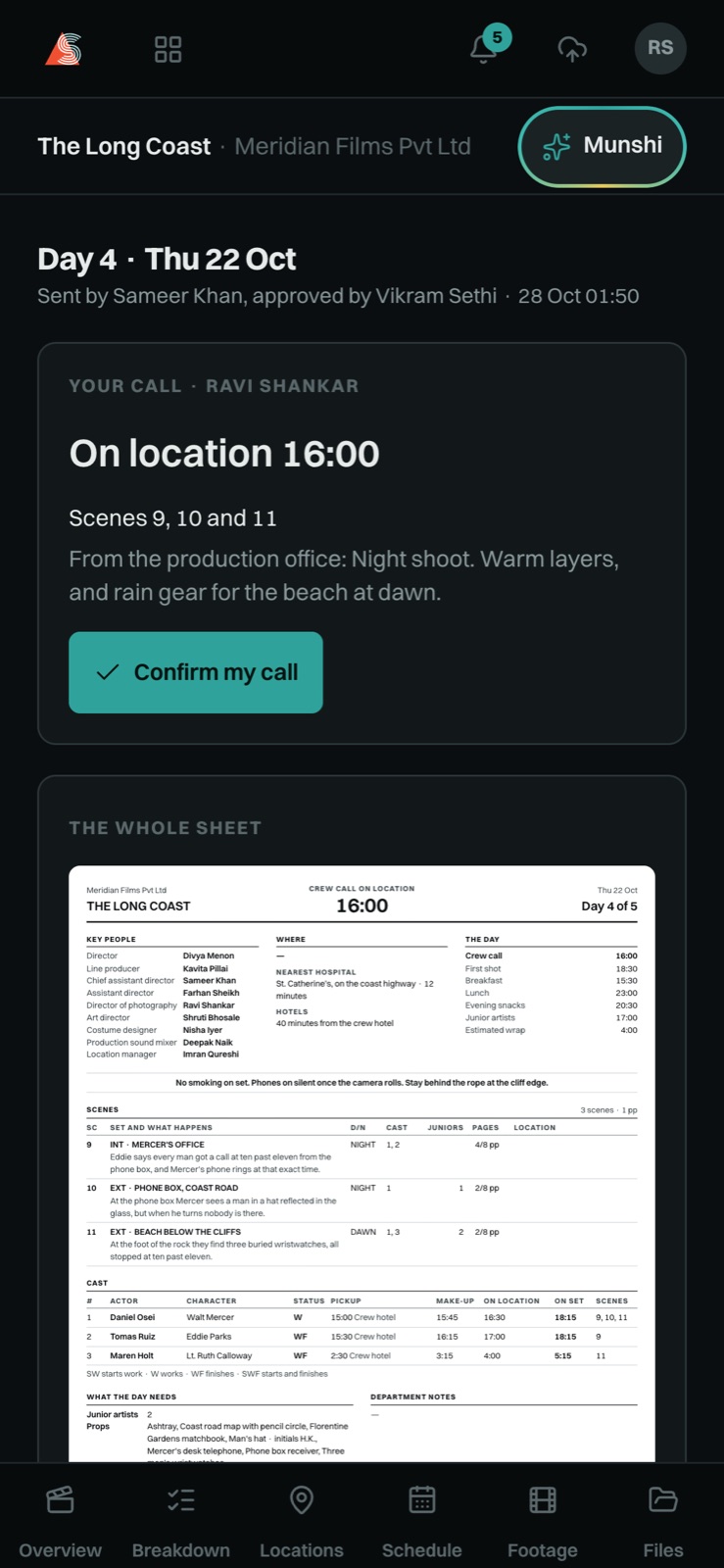
A crew member's call on a phone: on location at 16:00 for scenes 9, 10 and 11, with a button to confirm it.
Each call, confirmed from a phone.
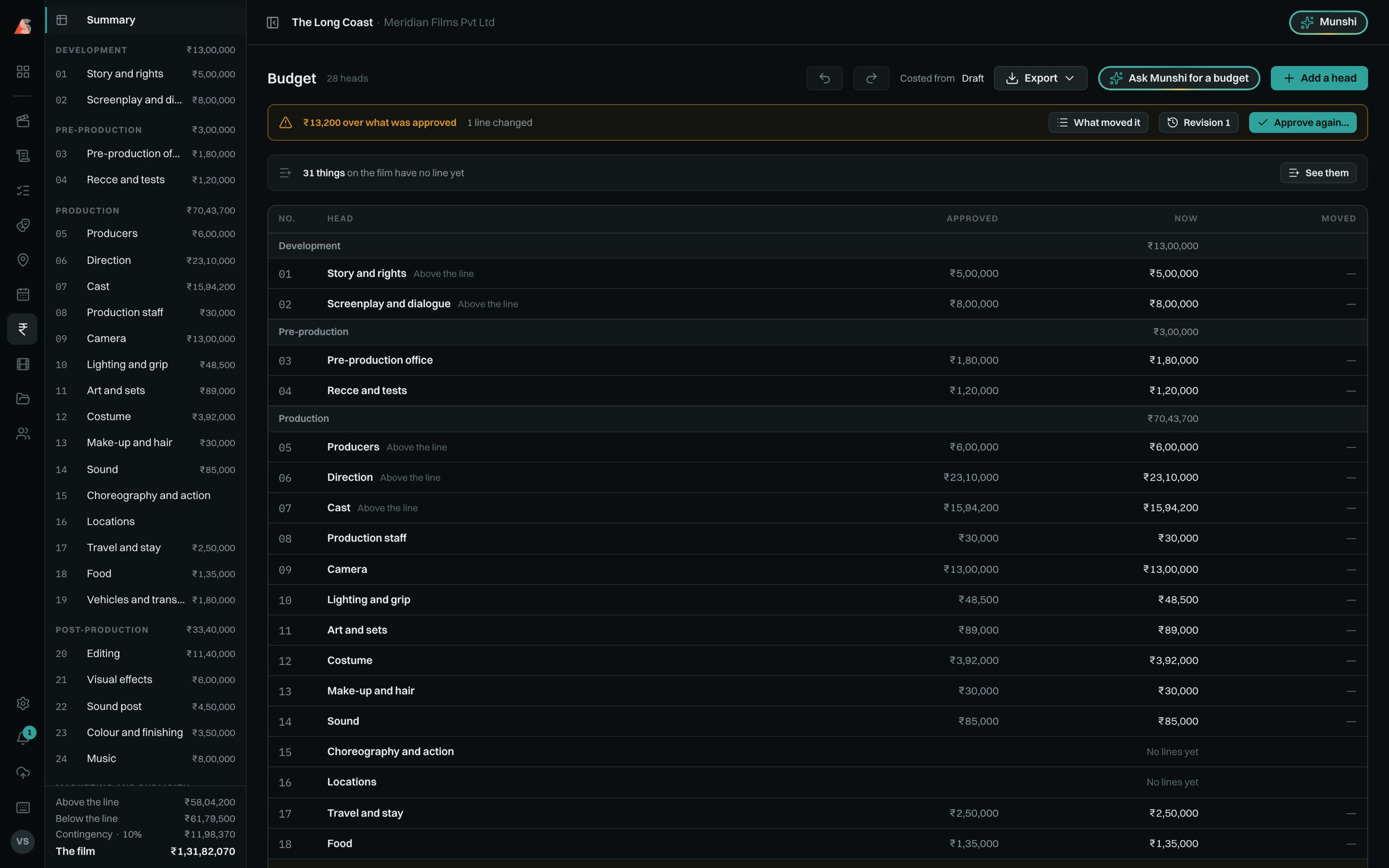
The Long Coast's budget: every head with what was approved and what it is now, ₹13,200 over what was approved after one line changed, and the film at ₹1,31,82,070.

The budget, from the breakdown and the board.

A line for a costume or a car reads the days it is on set from the schedule, and an actor's fee the days they work. Move the board and the budget moves with it.

  • Approved, then watched. The producer approves a version; every change after it shows against it, and what moved it.
  • Told the day it goes over. A bell and an email to the producer, once.
  • Sent as the office wants it. As a PDF or an Excel sheet.
How the budget works

The shoot day comes in, and nothing is lost on the way.

  • Uploaded the same night. From the browser or from the DIT's desktop app; the DIT chooses.
  • Checked against the DIT's own record. Every file is matched to the checksum list the DIT already writes, and anything that does not match is named.
  • Nothing is ever refused. A card in the wrong folder still arrives, and is shown to be filed.
  • The producer sees every day arrive. Without asking anyone.
How footage comes in
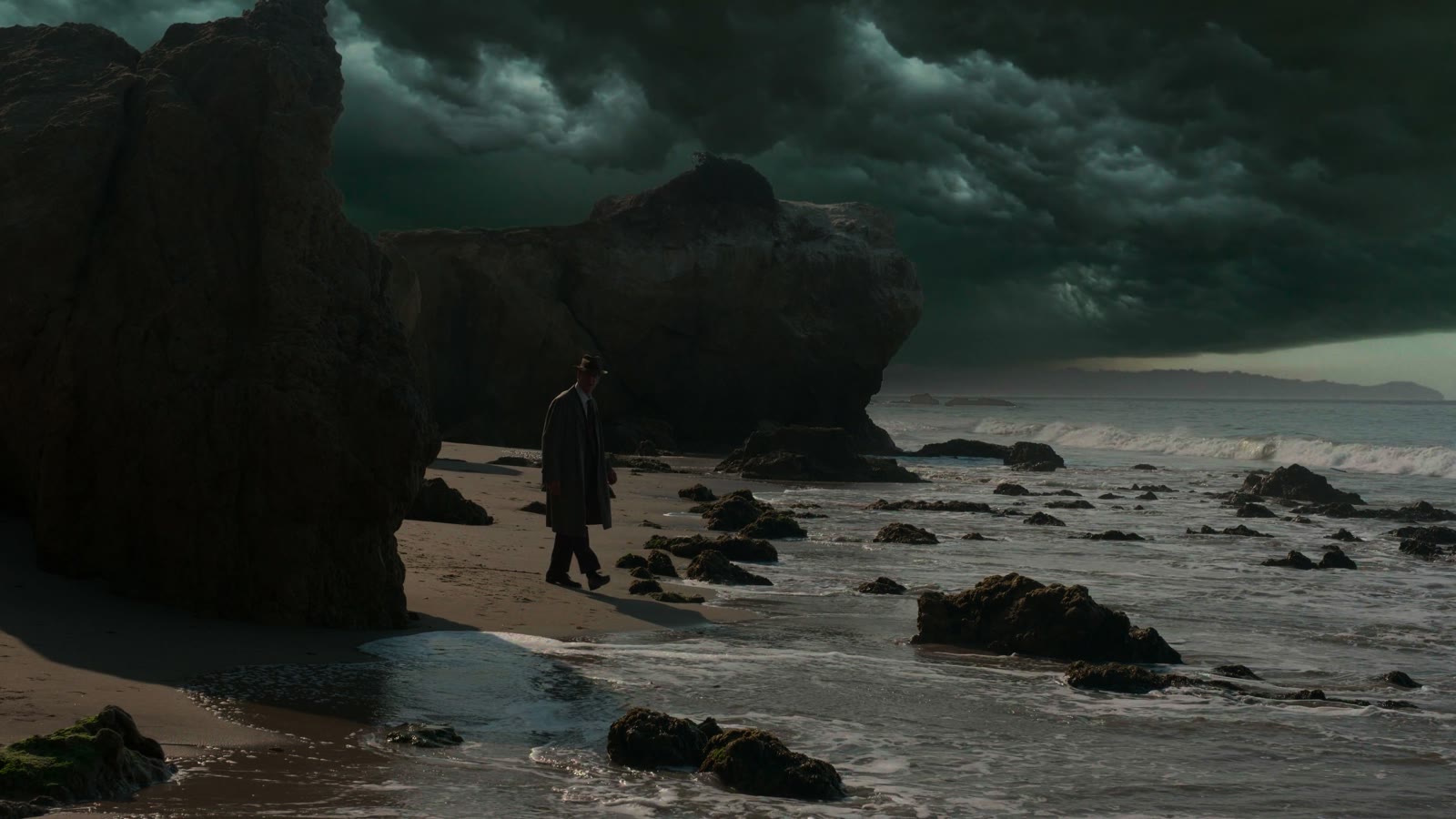
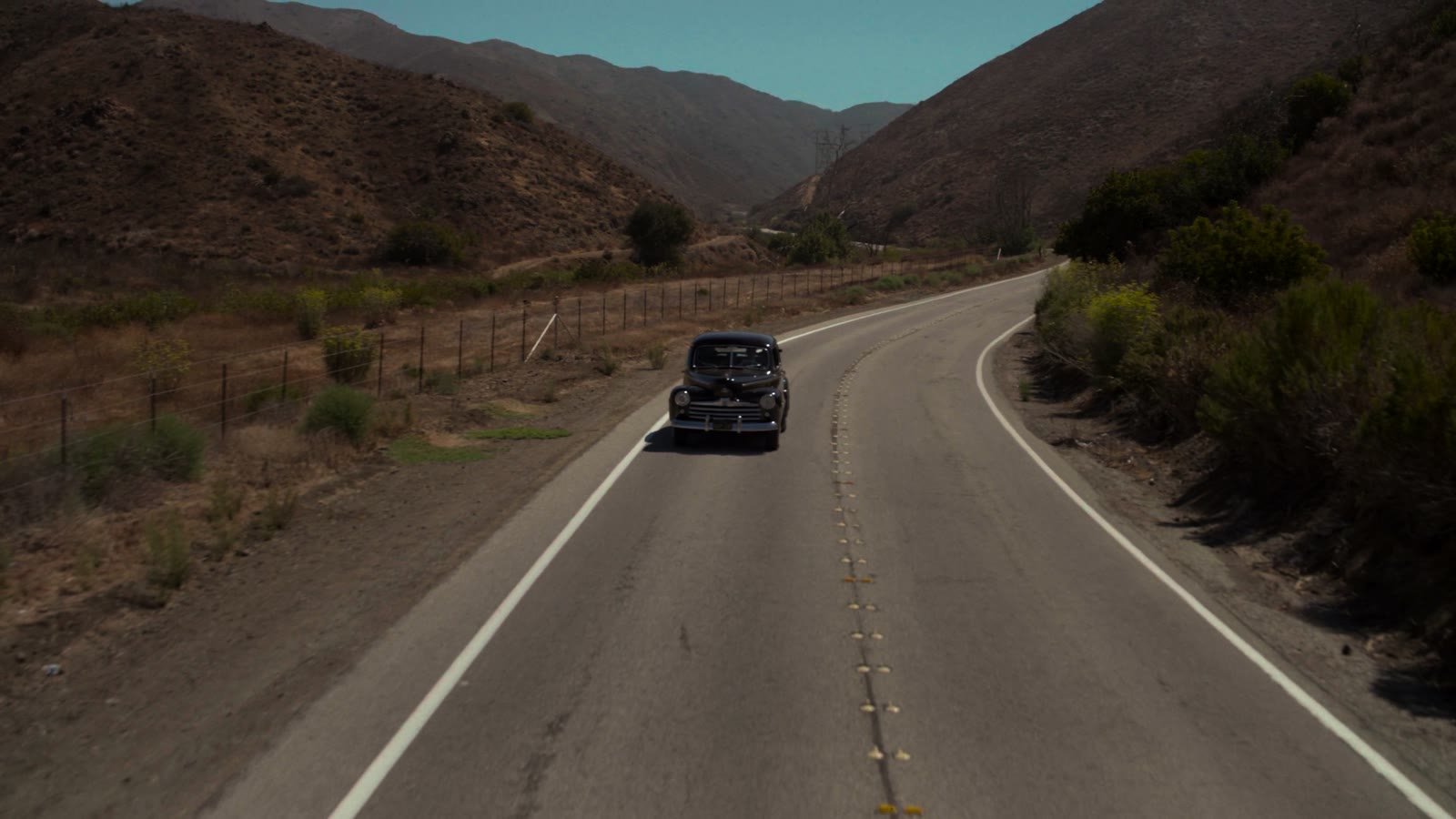
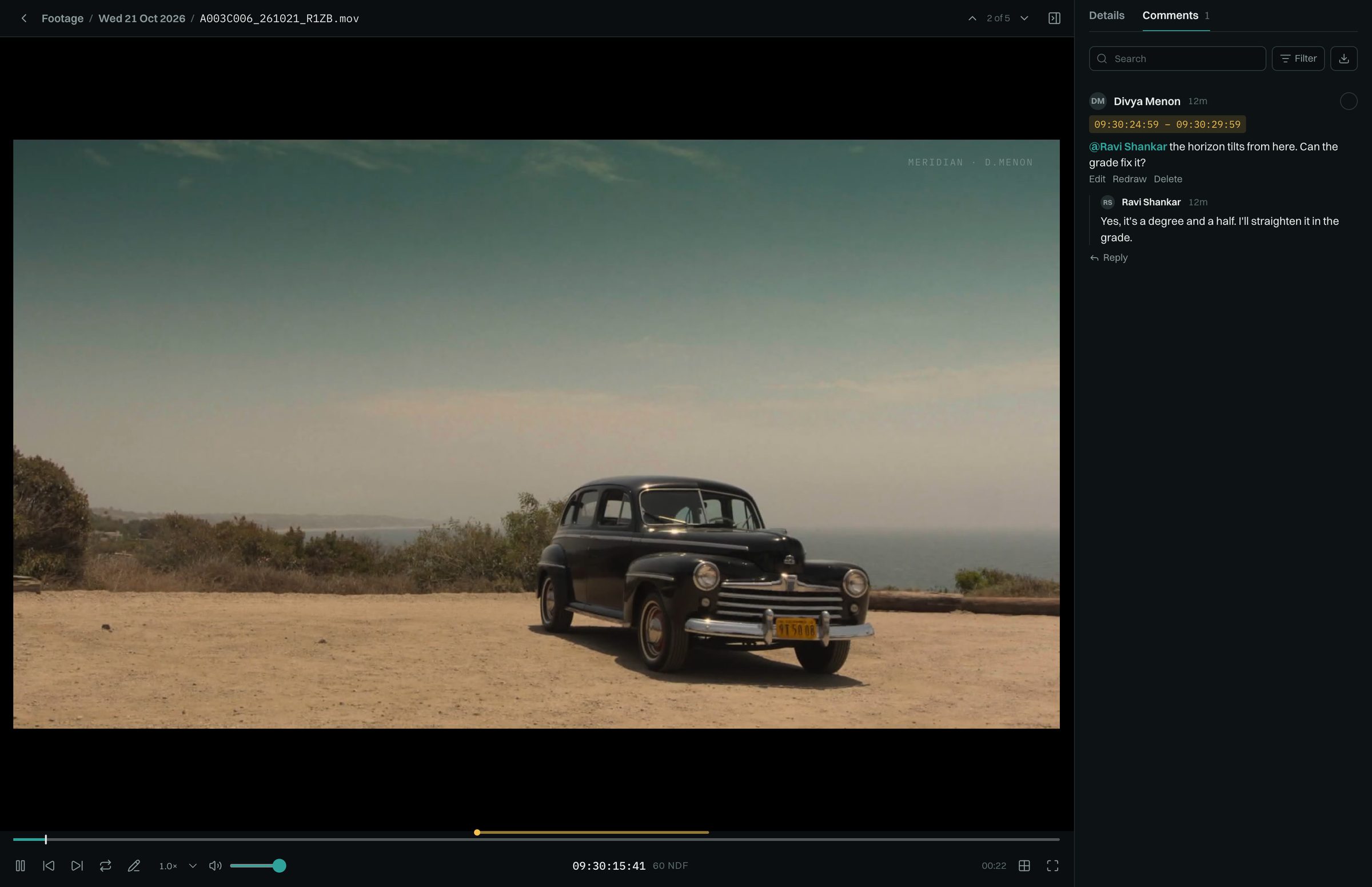
A daily of the sample film playing: a black 1946 Ford on a cliff road, the watcher's name over the picture, and beside it the director's note on a range of frames with the colourist's reply.

Watched, never handed over.

Dailies stream encrypted, with the watcher's name on the picture. Notes and drawings are left on the frames they are about and answered there; whoever is named in one is told. The director's notes go to the cutting room as markers for Avid, Premiere or Resolve. Every play is on the film's record, and when someone's access ends, so does their next play.

How watching works

Cut from a drive, or from a suite in the browser.

How the edit works

The edit opens like a drive.

The film's proxies open as a drive on the editor's own Mac, from the menu bar, each editor with their own key, and are cut on as they are. The originals never reach it. Take someone off the film and their drive stops within two minutes.

Coming The same drive on Windows.
Coming

A full edit suite, opened in a browser.

A powerful computer with the editing software, beside the film's footage, opened from any laptop and paid for by the hour. Nothing is downloaded, and nothing leaves.

Munshi

He does the reading. A person decides.

Munshi is the film's assistant, one button on every page. He proposes; nothing he suggests is kept until someone accepts it, and he never deletes or publishes anything.

  • Reads the script. Every page as it is printed, so a script in any language is read as written.
  • Breaks it down, scene by scene. Cast, places, props and vehicles, each scene accepted by a person.
  • Plans the board with the AD. He asks what matters first, says his plan, then builds it beside yours.
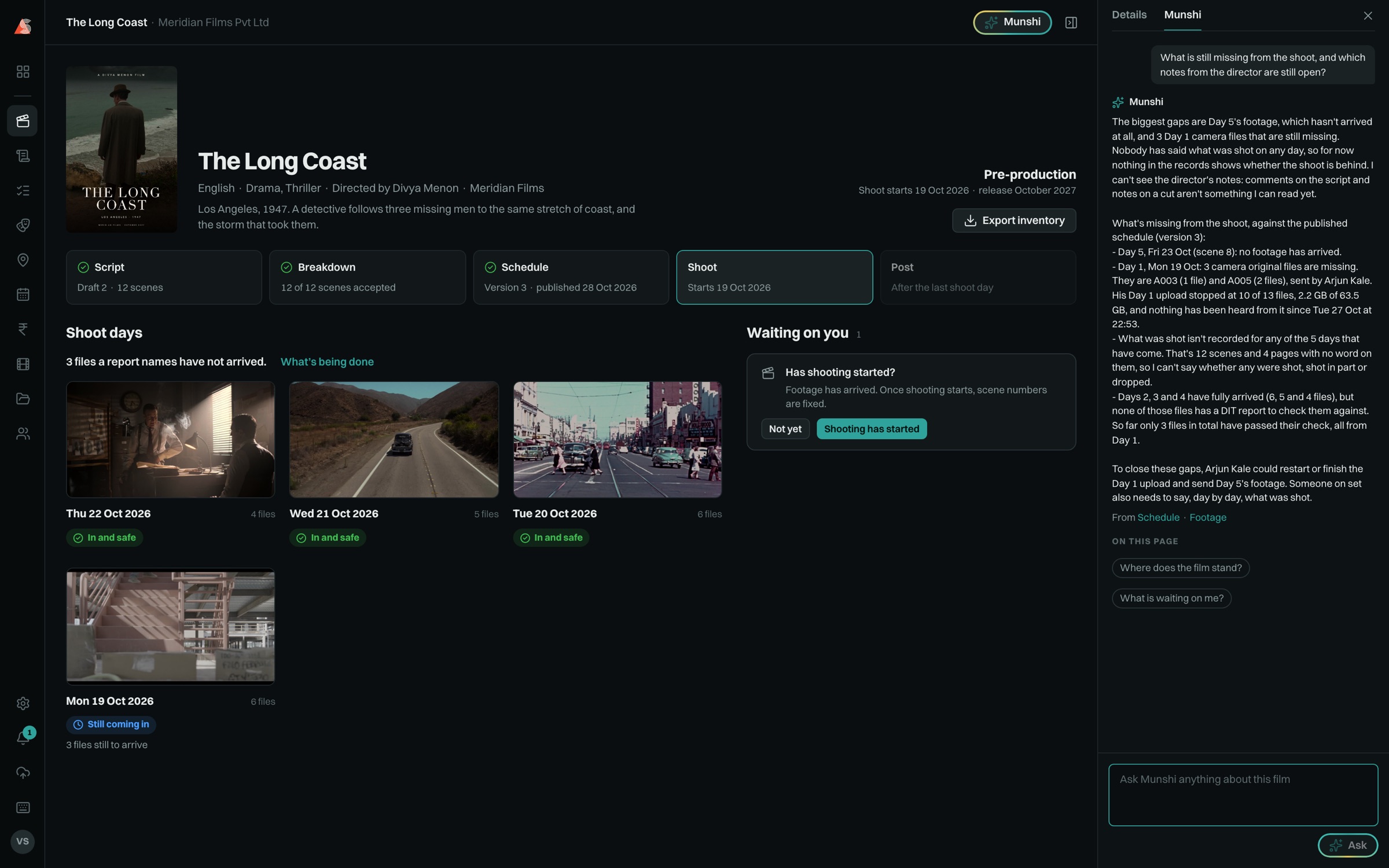
  • Answers from the film's own records. Figures are counted, never guessed, and what was never recorded is said.
More about Munshi
  • Which scenes need the 1946 Ford, and on which days?
  • What is still missing from the shoot?
  • Which days is Maren Holt away?
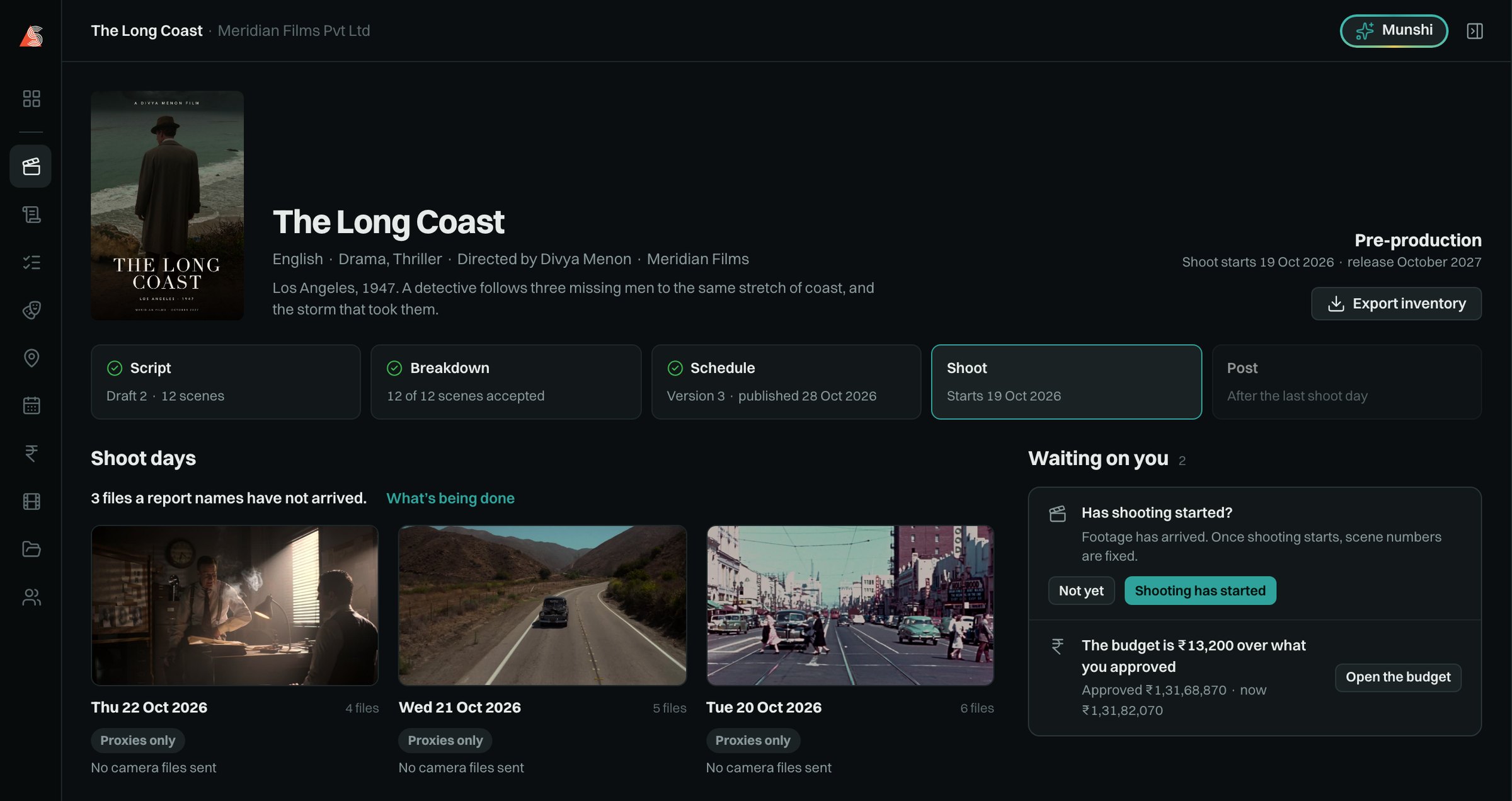
The film's Overview, and Munshi's answer beside it: which files are still missing, and what was never recorded.

Kept, after the film is done.

Footage cannot be deleted from AeroSync, by anyone. The originals go into the archive, and every version is kept. A year later you can still say what you hold, down to the clip, and hand over the list.

How a film is kept

One fee for the film.


Once, for every tool and every person on it. No seats, no plans to choose between.

  • Every film is free until you shoot.
  • Storage is billed each month for what the film holds.
  • Munshi's reading is included up to a limit, and charged by what it costs past it.
Every charge, explained

Start with the script.
Keep every frame.

Start your first film Free until you shoot