
Before the shoot, the same film.
The script is read, broken down, put on a board, called and budgeted, in the place the footage will arrive. Nothing is typed twice: the board reads the breakdown, the call sheet reads the board.
Script
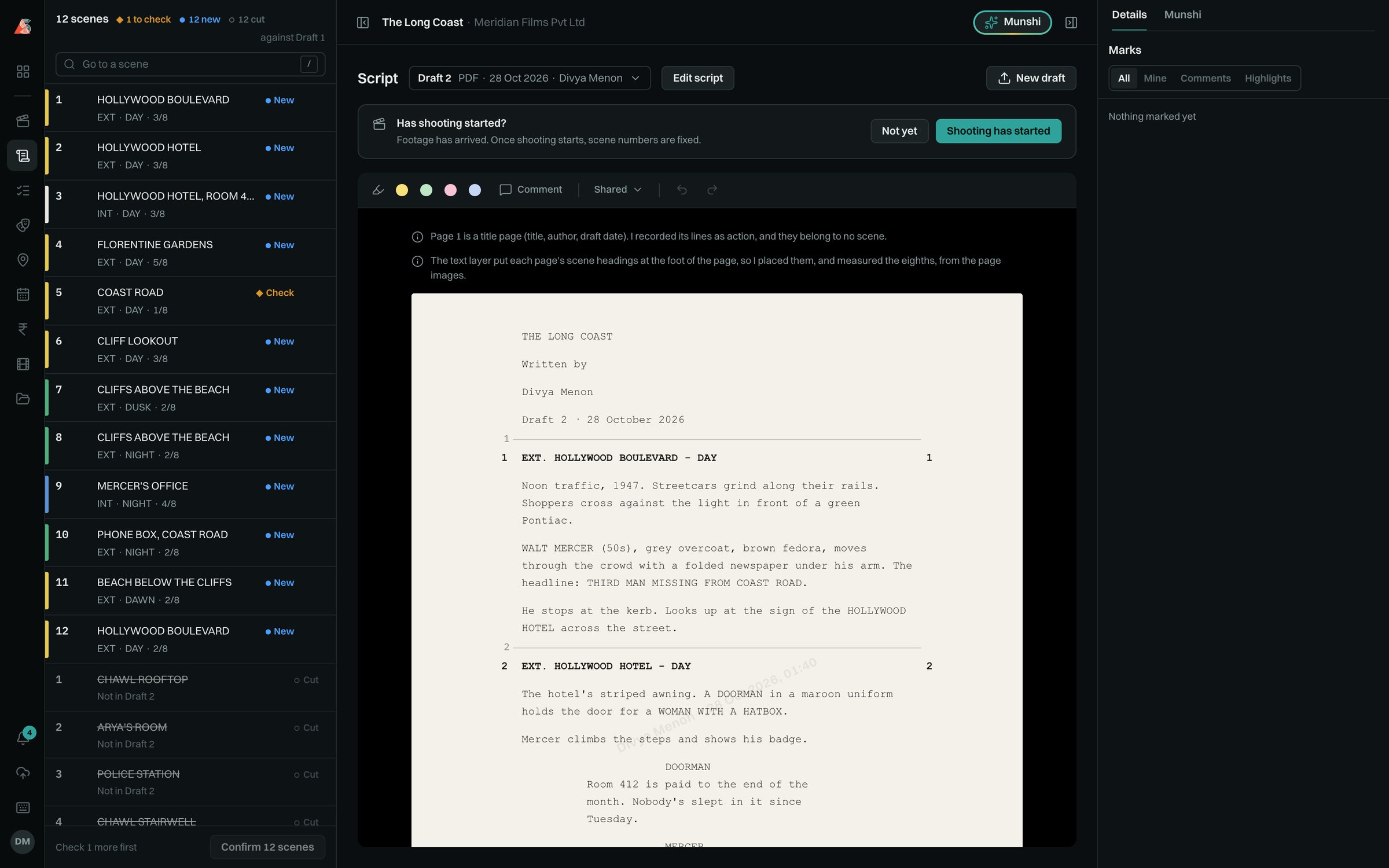
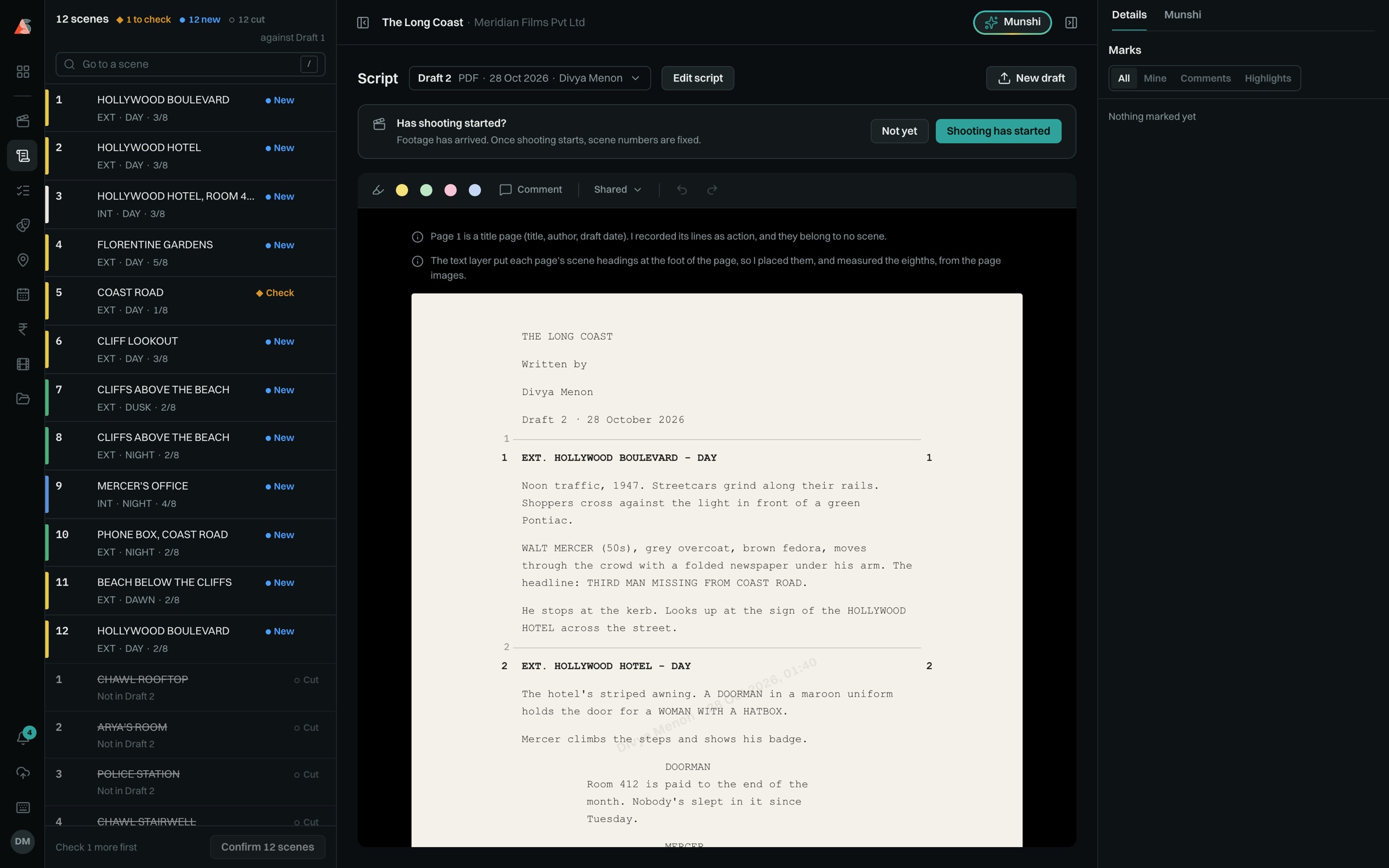
The script, read as it is printed.
Upload the draft as it is, in any language. Munshi reads each page as a picture, so a script in Tamil, Hindi or English is read as it was written, not as a file's hidden text says it is.
- Checked on its line. A heading that is unclear or a name spelled two ways is shown on the line it is about, with what it means. Done goes to the next.
- Put right by the writer. Edit the script, and the checks your changes answer say so. Saved once, at the end.
- Every draft kept. Compare two drafts scene by scene. A draft that is downloaded carries the name of whoever took it.
Breakdown
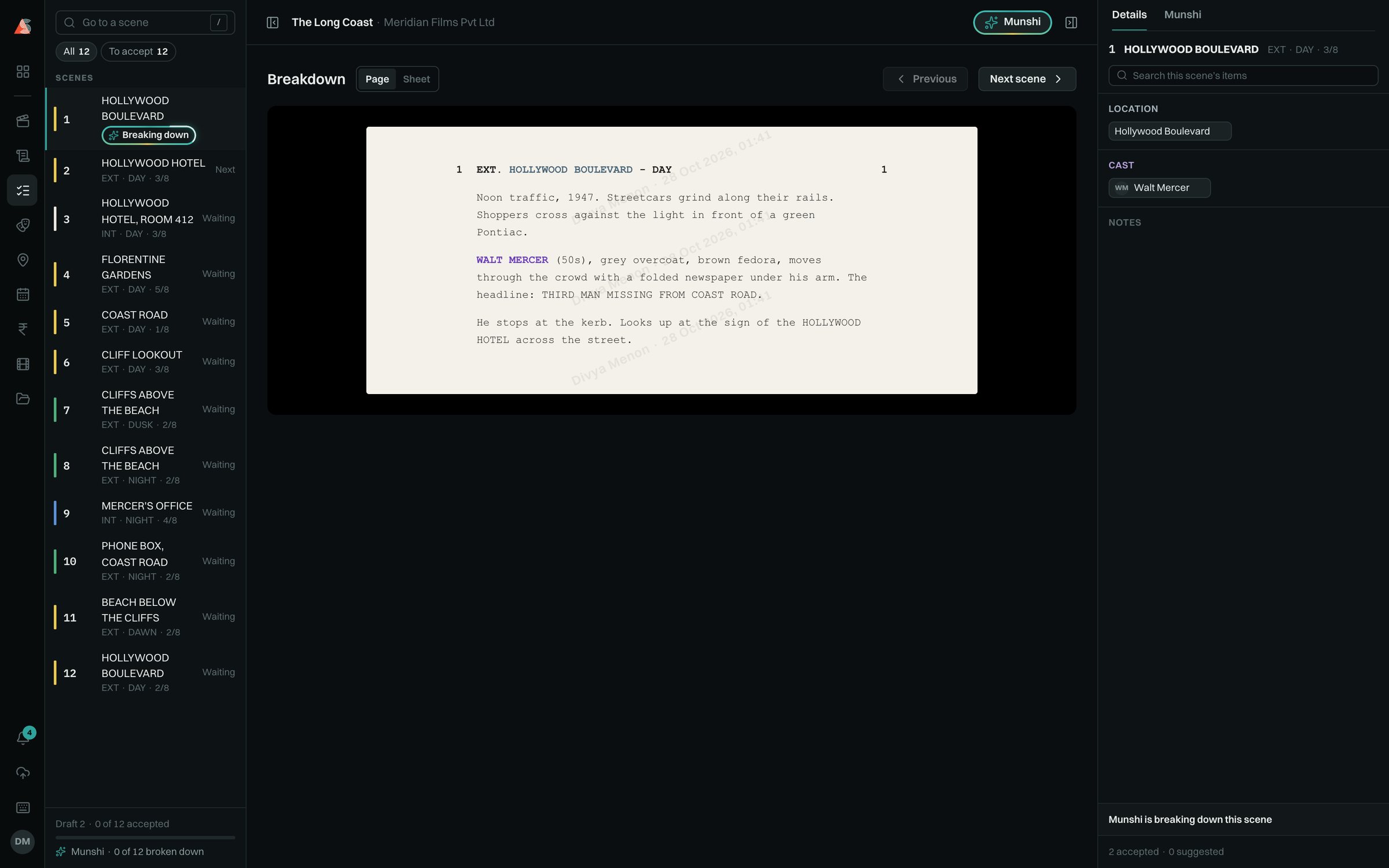
Broken down scene by scene, and accepted by a person.
Munshi suggests what each scene needs, in order, told the film's list so far, so one car is one car on every page it appears. You accept each scene, change it, or take things off.
- Every department's list. Cast, junior artists, props, costume, make-up, vehicles, animals, effects, camera and grip, and more.
- One thing under one name. Two names for the same thing are found and merged; a merge can be undone.
- How many, typed once. The count of junior artists a scene needs is set here and read everywhere else.
Schedule
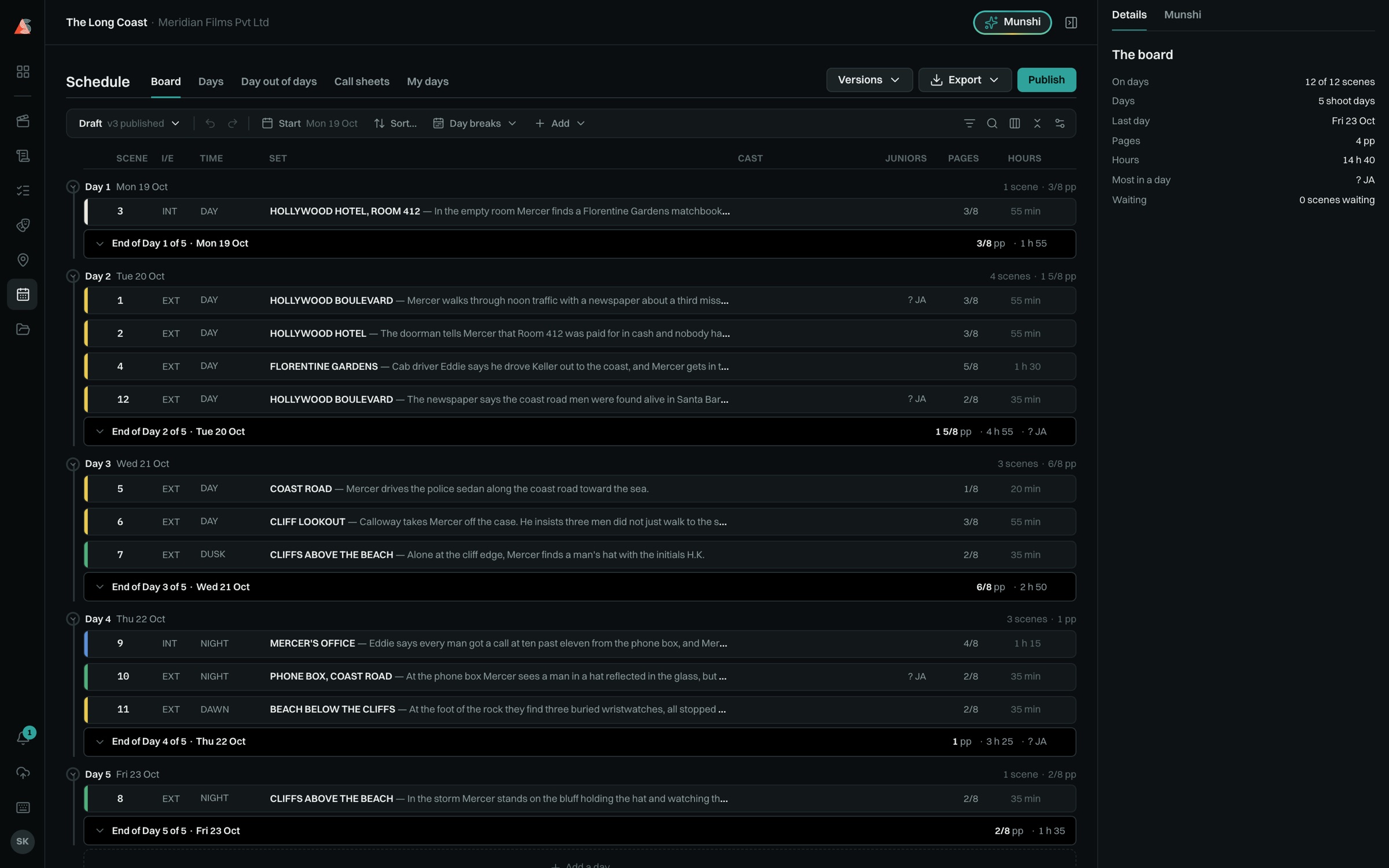
A board the AD can move by hand.
Every scene is a strip. Drag it onto a day; what is not placed waits at the side. The board counts each day's pages and hours, and says what clashes.
- Clashes, said. An actor on a day they are away, a location on a day it cannot be had, a holiday, a day forecast wet with a scene outside.
- Munshi's board beside yours. Ask him for one and he asks what matters first, says his plan, and makes it beside your draft, never over it.
- Published when it is ready. Days out of days, versions, and a printed board.
Cast and locations
The cast, the places and the weather.
What the board needs to know about the people and places in the script is kept once, on their own pages, and read by everything else.
- Each actor's dates. The dates they have given and the days they are away, drawn against the published shoot days.
- Locations and the recce. Found on the map near the film's city, the pin confirmed by a person, recce photos taken on a phone, and the days the place can be had.
- The weather on each shoot day. Within the week, by the hour, on the board and on the call sheet; a wet day with a scene outside is told the evening before.
- The holidays that apply. Central and regional, for the states the film shoots in.
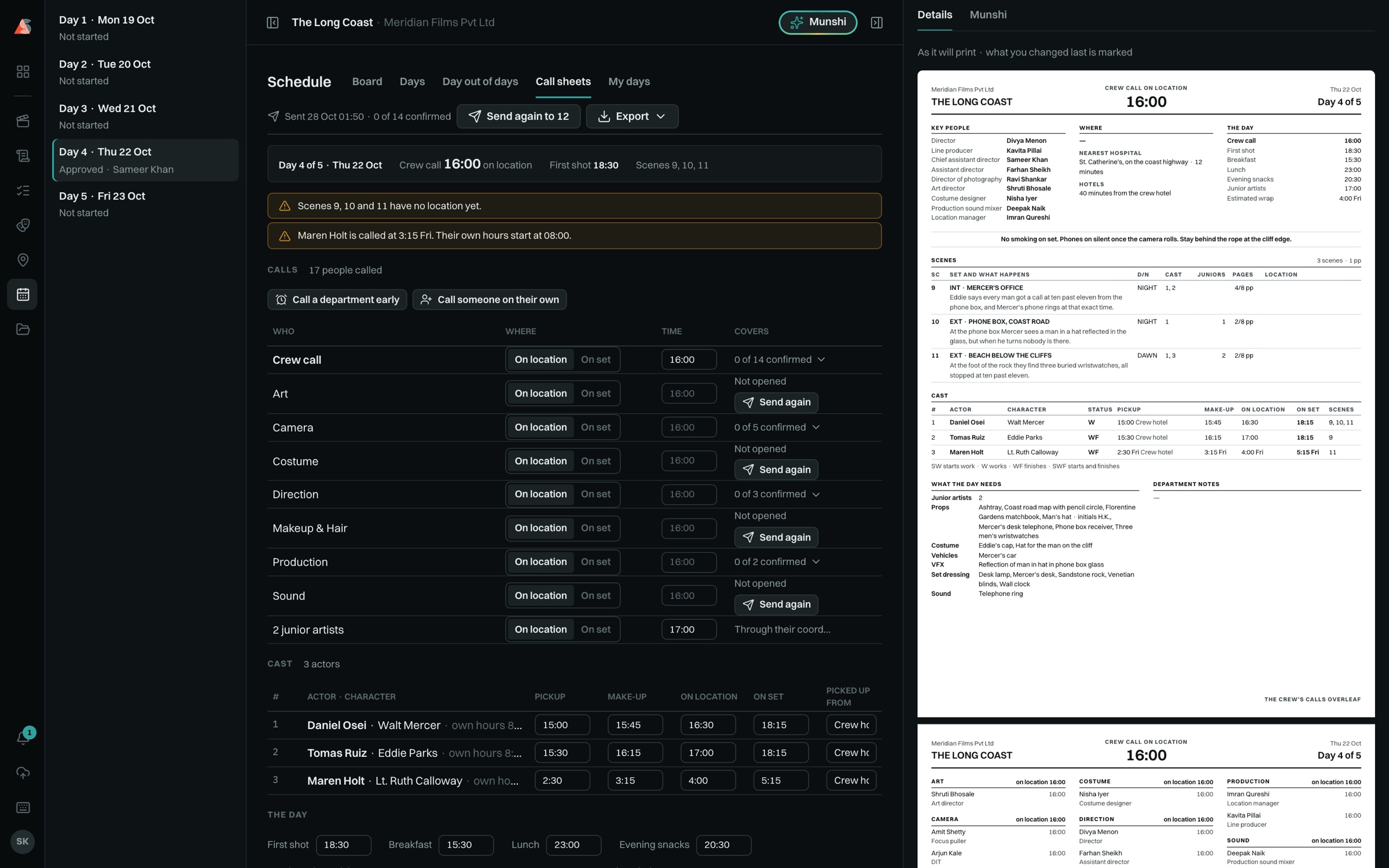
Call sheets
Call sheets: prepared, approved, then sent.
The AD calls departments and people from the published board, and the sheet is drawn beside the calls as it will print: a portrait A4, the crew's calls and the contacts on the back.
- Missing things said before it goes. A scene with no location, an actor called before their hours begin.
- Approved, then sent. By email, in the app and as a PDF. A change after approval puts it back to waiting, and a revision goes only to those it changed.
- Confirmed from a phone. Each person sees their own call and confirms it; the AD sees who has.