
He does the reading. A person decides.
Munshi is the film's assistant: one button on every page, and a panel beside the work. He proposes; nothing he suggests is kept until someone accepts it, and he never deletes or publishes anything.
Script and breakdown
He reads the script, and breaks it down.
Each page is read as it is printed, in any language. Then each scene, in order, is broken down into what it needs, and you see him working through them: the scene he is on, the next, and the time left.
- Accepted scene by scene. Every suggestion is a person's to accept, change or take off.
- One thing, one name. He keeps the film's list as he goes, so the same car is not two cars.
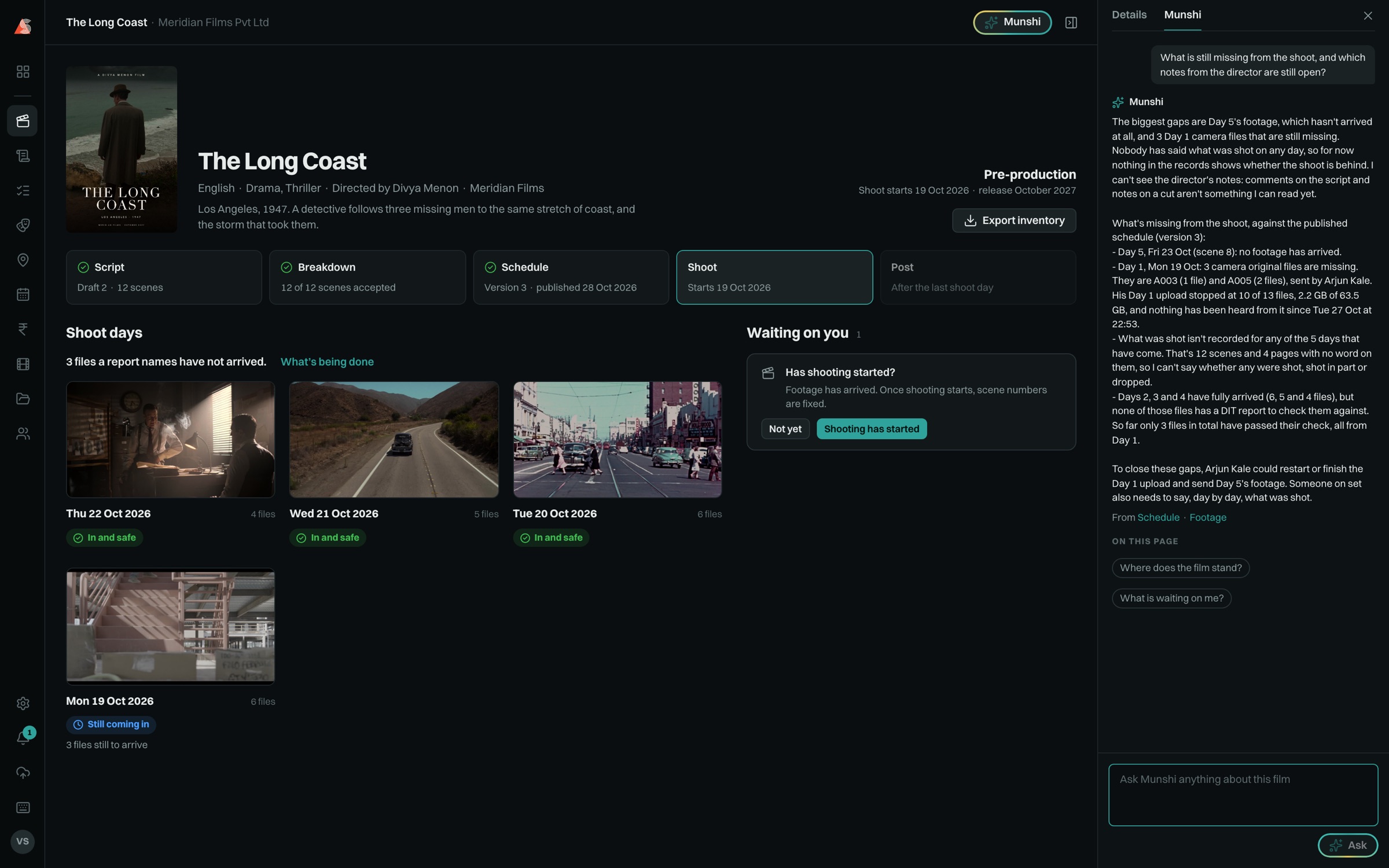
Asked anything
Ask him anything the film's records can answer.
Figures are counted from the records, never guessed. What was never recorded is said to be not recorded, never shown as nothing. He says where each answer came from.
A change is talked through, planned, and only then made.
Ask him for a board, and he asks what matters first, one question at a time, says his plan, and makes it beside your draft while you watch.
- Tried before it is made. Each step of a plan is tried first, and only kept when you press to make it.
- Only what you could do. He proposes what a person could do by hand on that page, and never what deletes or publishes.
- He knows the product. Ask him how to do something, and he answers from the same guide the screens are made to.
- Never a guessed figure. A rate nobody has given him is left blank, and he says so.
What he costs.
A film that is not yet upgraded gets one reading of its script by Munshi, free. An upgraded film includes a set amount of his work; past that, he is charged as he is used, on the film's monthly invoice.